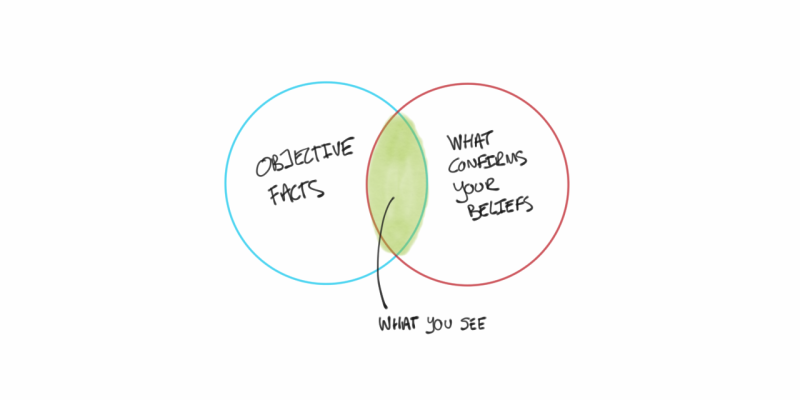
Everyone has biases, whether we realize it or not. It’s just a part of human nature, a result of our upbringing, education, experiences and beliefs. All of these shape our own personal view of the world. And with it comes some things that we are just predisposed to liking or disliking, some things we’re more open to believing in, or more resistant in trusting. It influences the facts that we value, some more than others.
We should strive to be objective when it comes to factual matters and discussions, but achieving perfect objectivity is impossible, because there’s always going to be some sliver of personal bias that’s subconsciously affecting us. This is where science comes in; the scientific method is designed to remove as much personal bias as possible, relying only on real data and evidence. But still, even if we have all the facts in the world, it’s which one we acknowledge is the issue.
The availability of information is not the problem our world is facing, with our technology and the internet, the whole treasure trove of human knowledge is at our fingertips. But with it comes a whole slew of disinformation that not everyone knows how to sift through. It’s easy to get pulled in an echo chamber, particularly if it confirms the biases you already had. That’s why in today’s world, there’s no shortage of conspiracy theorists, scammers, extremists and misinformed masses, proudly spouting off misinformation which can sometimes be dangerous.
We can never fully eliminate our biases, the most we can do is be aware of it, and mind that we don’t fall into useless echo chambers that only reinforces our biases instead of challenging them. And most importantly, never stray away from the facts.