
Alright let's get right into the point this time, but I just want to preface this with my gratitude for you regardless if this is your first article from me that you've ever read or a regular. Also happy new year too. :3
I was really afraid that I won't be able to get a topic for my blog even though school gave me a month long of holidays. I, wisefully, spent the whole month playing Genshin Impact. Now, I'm not gonna critique the game as a whole, it's actually a pretty good game on its own; the overarching stories, the inspirations taken from Gnosticism, Kabbalah mysticism, and Ars Goetia, and of course the open world itself. It's quite an immersive RPG, but I digress. If you're a (self-proclaimed) gamer, you could probably tell from the title of the article that I'm going to talk about the gacha mechanic of the game. For some people, this mechanic is one of the main appeal of the game; you basically spend in-game currencies (that could be bought using real money) and hoping to get the character you wanted because it runs on RNG (Random Number Generator). While it's true that there's a point where the game will guaranteed you the character you wanted, you can still obtain the said character but with lower odds. Obviously, this mechanic turns off some people too from playing the game because the game demands you to play it constantly to keep up with the gameplay aspect, and some people doesn't have the chance of experiencing that. It's utterly dependent on your luck.
It's... a very flawed mechanic, but it does the job exceedingly well-done for keep majority of players engaged and of course monetizing off them. But y'see, there are other ways to utilize RNG in a video game. Now I'm gonna give you two other examples to show that RNG isn't necessarily "unfair." These two games used RNG as... practically the core gameplay element, but it still caters player to keep playing the game. Let's go into the first one:
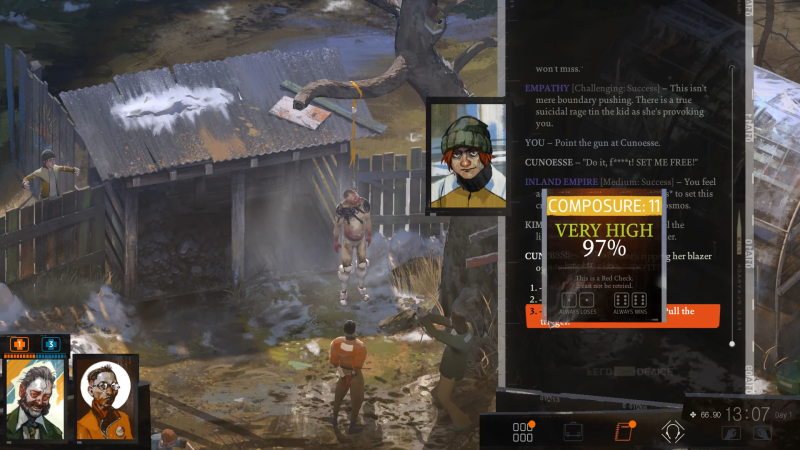
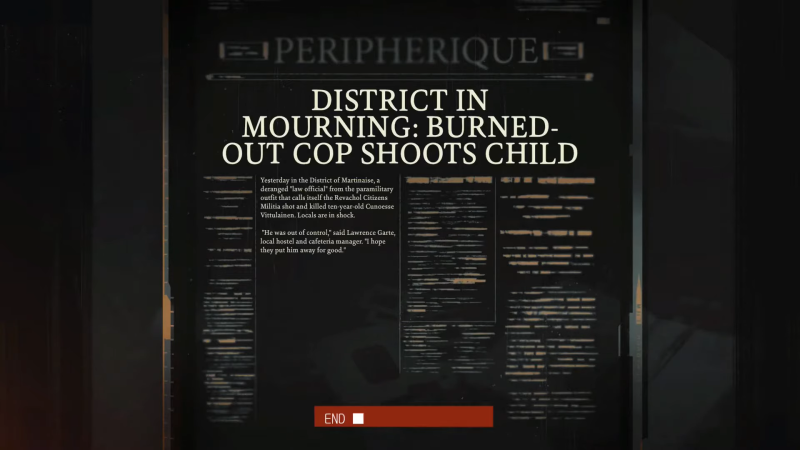
Have you ever heard of Disco Elysium? This game is an interesting one, to say the least. This is a game about a detective assigned to solve a murder mystery, but the catch is, this detective lose all of his memories overnight. Naturally, you'd have to ask people and interact with objects to progress through the game, and when you do that, you have these thoughts representing skills inside your head giving you more dialogue options. Some of these dialogues are locked behind a dice roll between the value of 0 to 1; successful or failure; and the higher you put points into a skill related to the locked dialogue, the higher the chance of it being successful. The interesting thing is that if you failed the dice roll, the game will compensate by giving you some contents which is locked behind these failures. For example, in the early game, when your partner asked for your identity, and if you failed the dice roll check for coming up with a good name because you forgot your real name, later on, the game will give you an option to come up with an even better name, "Raphaël Ambrosius Costeau" (it is meant to be really exaggerated). This name also gives you perks that'll improve your character's skills. There's also a dice roll check for... shooting a child just because she bullied you for missing your shot when you were trying to aim for a certain something. I'm sure that 99% of the players would want to shoot the kid because how annoying she is. The game proceeds to end itself afterwar if you successfully shot the kid (yes the game is rather unhinged and dark but there are still boundaries). It's a really good example of branching ludonarrative and how to make your luck seems rewarding and/or engaging regardless of the RNG value; it doesn't necessarily give you good outcome for a successful dice roll and vice versa.
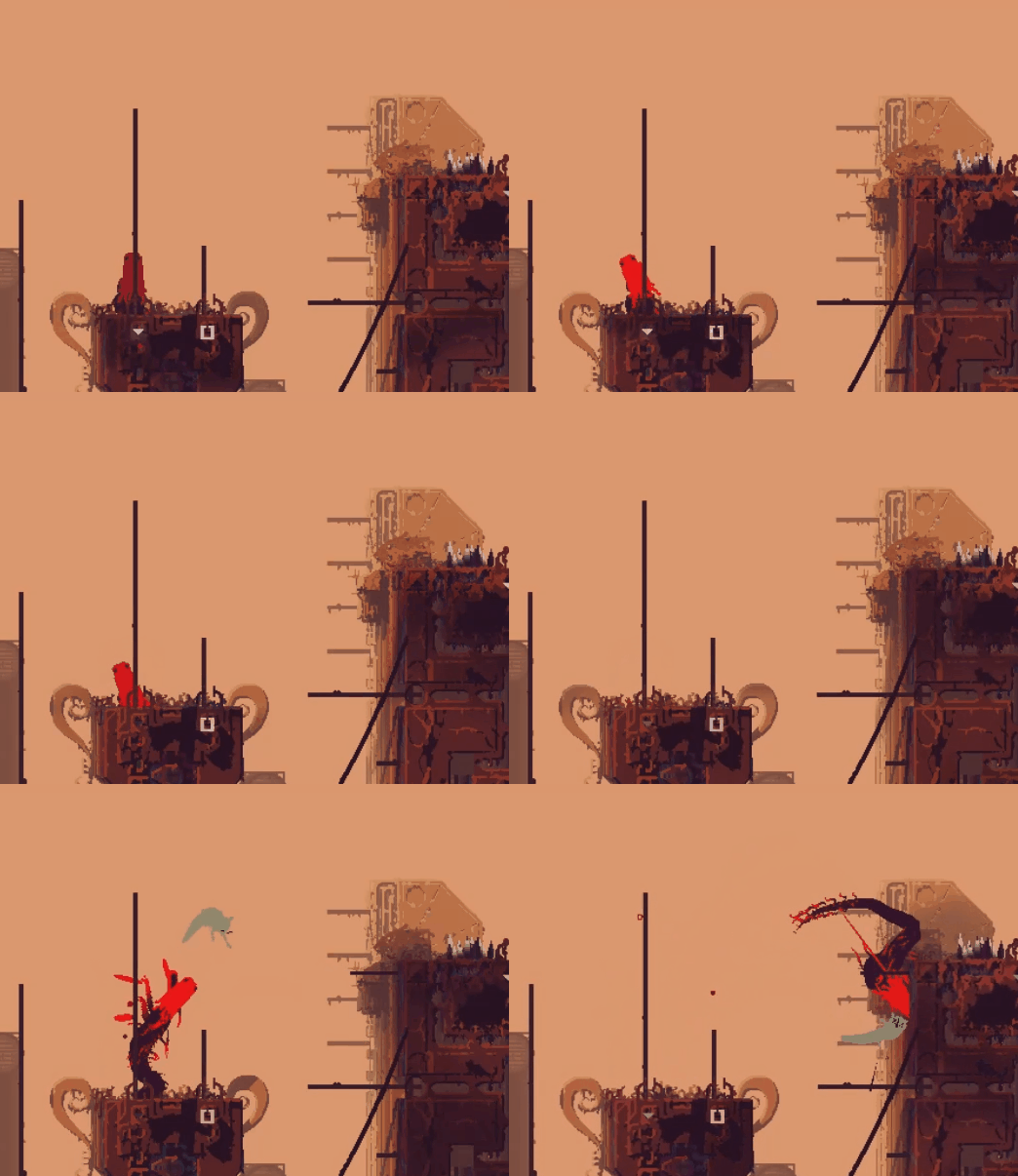
The second game is... not much different but it takes a whole new approach. This game is called "Rain World." You play as a slugcat, and... the game just straight up throws you into the cruel ecosystem of Rain World right off the gate. It's not afraid to let go of your hand and lets you learn all the things by yourself (except for basic movement controls). Rain World is somewhat of a metroidvania, but the main highlight of this game is that all of the entities in the game are... constantly active even when they're off-screen, just like an ecosystem should. They've been programmed so intrinsically to have routine and behaviour of their own, and this is when RNG comes into play. Life is unpredictable, so is this game. They implemented RNG into their routines to spice things up for the player. It makes the whole game much more immersive and ⎯ well ⎯ unpredictable. RNG made these simple routines and behaviours emerge into more complex ones. You're like at the bottom of the food-chain in this world and you'll get murdered brutally by the lizards (main predator of this game) dwelling within it over and over again, and some other creatures still have the possibility of getting killed by those lizards. Even some of the predators will fight each other for their prey. These lizards are varying in type, and their behaviour is different for each type. For example, orange lizards will hunt you in pack, and naturally this pack has an alpha, and if you kill the alpha, all of the orange lizards will still hunt you but in a more uncoordinated way. They typically hunt the player with flanking method and overall teamwork that can be considered really cunning for an AI. Some lizards could kill itself too because of simple mistake like accidentally fell from a really high place because the said lizard was lurking at the edge of a ledge. Oh yeah, their moves are procedurally generated too, meaning... it's RNG too. It really sells the fantasy of a fictional ecosystem really well. Sometimes you're lucky to not stumble a giant vulture while you were picking up fruits, or... not; sometimes you're lucky that a scavenger won't kill you just because of your neutral reputation amongst them, but sometimes it does the opposite; sometimes when you enter a room there's already three lizards fighting with a giant vulture and you just kind of there to observe the epic battle between them. This game somehow makes the world seemingly more natural and realistic with RNG. Also, unrelated note; this game looks heckin' gorgeous.
Well, I think I made my points clear. In conclusion, there are a lot of ways to implement RNG into your game, and some of them could bring your definition luck onto the next level in terms of reward and engagement. I hope I summarized my points concisely and accurately, while still being pretty comprehensive. If you have further questions about this, I'd love to discuss it with you on the comment section. That's it for now, dear reader, I hope to see you next time in my upcoming articles, because I honestly still have a lot more to talk to about my fascination of video games. Farewell, and... have a g'day. Or night.