

Recently, I rewatched Wes Anderson’s 2009 movie, Fantastic Mr. Fox. Although it was marketed as a children’s movie, based on the book by Roald Dahl, it holds more than just that. I think it’s a very underrated movie.
The first time I watched it was when I was about six, and I really never thought about it again. Some time ago, however, several clips of it appeared on YouTube and I watched them. As soon as I clicked on one, I remembered the scenes and all the memories tied to it. So I rewatched the whole movie, and I re-rewatched it again with my mother.
I think many different aspects of the movie make it so memorable.
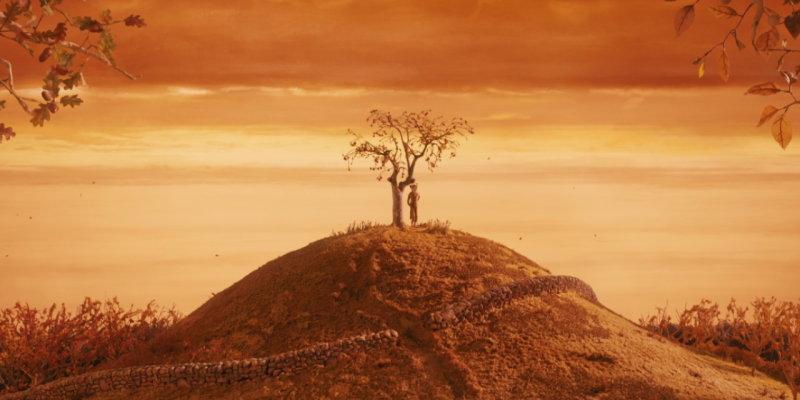
First of all, the cinematography and animation played a big part. Wes Anderson is known for his unique visual style in films, mainly because of the detailed set, interesting world building, symmetry and colours. His colour palettes are normally pastel, but Fantastic Mr. Fox had a more autumnal palette. Either way, his consistently symmetrical shots paired with the palette provides an otherworldly, picture-book world. Fantastic Mr. Fox was no different—except for the fact that it was Anderson’s first stop-motion animation film. I watched a behind-the-scenes video on the process behind all that, and it truly was amazing. A single scene could take several days to shoot and direct. Every little detail—and there were many details, from minuscule grains of sand to hand-painted cutlery—was made and arranged one by one. Puppets were used for the characters.
Second, the characters themselves were memorable. They all had the quirky Wes Anderson spark, in the way they behaved and dressed and talked. The main character, Mr. Fox, had well-executed internal conflict. Yet he was also charming and clever, like the way most red foxes are portrayed in media. The other characters were also unique and well-thought-out. Even the background characters had their own charms.
The score for the movie was composed by Alexandre Desplat. From early on, it gives us an insight into the movie. It was charming and unique, it set the tone, and it is enjoyable to listen to while writing. The soundtrack also features songs by other artists, such as The Ballad of Davy Crockett by The Mellomen (a singing quartet from the late 1940s). My favourite part of the soundtrack was Kristofferson’s Theme, a simple yet enchanting tune.
Finally, the story itself made the movie perfect. Although it is based on the book, there were many added elements that made it different—but not unrecognizable. Without giving away too many spoilers, I think the theme of the story was quite meaningful. It centres around the fact that although these animals are anthropomorphic, dressed, English-speaking and civilized; deep down they are still animals. One of the most enigmatic scene in the movie, near the end, the ‘wolf scene’, represents exactly that. The film ends with a bittersweet note, somewhat daunting, with Mr. Fox raising a glass ‘to our survival’. The music ends at that word, though it is followed by dancing, but the dramatic pause reinforces the importance of the theme.
Overall, I think this is an amazing movie and one of my favourites. It isn’t that well known, since 2009 was a fruitful year for animation, and it was overshadowed by other great movies. Nevertheless, it is worth watching. It may seem, at first, like a normal children’s movie. It storyline may appear unpromising, like a ‘human bad animal good’ kind of thing. But it isn’t that simple after all.
The image is from the opening scene, and I got it from Pinterest.








Good review.. i love Wes Anderson's movies..