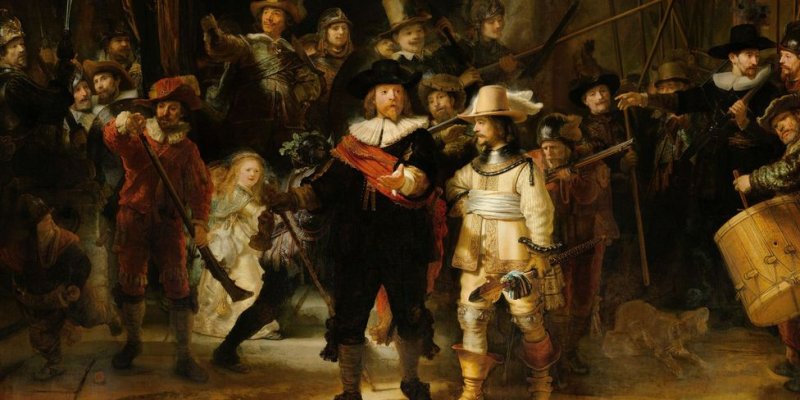
A relic from the Dutch golden age, “The Night Watch” is Rembrandt’s masterpiece. It’s a painting that illustrates perfectly his mastery over light and shadow. Currently it is the crown jewels of the Rijksmuseum in Amsterdam, the most famous painting in all of the Netherlands. The size of this painting is also no joke, at 3.63 x 4.47 metres, the figures portrayed within it are life-sized. Which adds to the awe inspiring effect this painting has, as if it is a window back into the 17th century.
There is a lighting concept in art called Chiaroscuro, which refers to the style of clear and harsh tonal contrasts between light and dark. There are lots of famous artists that used this style, namely Carravaggio and Leonardo Da Vinci. Indeed, Rembrandt also was inspired by those works, but his style of Chiaroscuro was different. Making the contrast softer, the light that illuminates the subject takes on a transcendent warmth, as if the light was an innate part of the subject, inseparable from its identity.
This painting’s composition is bursting with style and energy, every single subject’s place in the painting has a purpose, it strikes the perfect balance between chaos and unity. It is so lifelike that I can almost see them moving around the frame. It really captures the dramatic flair that baroque paintings are known for.
Unlike many other group portrait commissions at the time, which are predominantly every member of the militia standing in a horizontal line, with even light and the same amount of detail given to every face, Rembrandt’s version stands alone. This scene that he painted tells a story, it gives off a clear heroic feel to it, a call to action. Even though in real life, these kinds of civic guard militia groups in Amsterdam are mostly ceremonial and serve no real purpose, given the peacetimes of early 17th century Amsterdam.
Another fun fact about this painting is that it’s not actually portraying nighttime. Rembrandt intended this scene to be set in daylight, but the numerous applications of dark varnish and layers of dirt has darkened the scene enough that it appears as though it’s set at night. The actual title for this painting is also originally very long, Rembrandt originally named it “Militia Company of District II under the command of Captain Frans Banninck Cocq”. Which is quite a mouthful. But a century later someone called it simply “The Night Watch” (or Nachtwacht in Dutch), and the name just stuck. Whenever I get the chance to visit Amsterdam again, I’ll definitely have to visit the Rijksmuseum and see this historical piece for myself.