

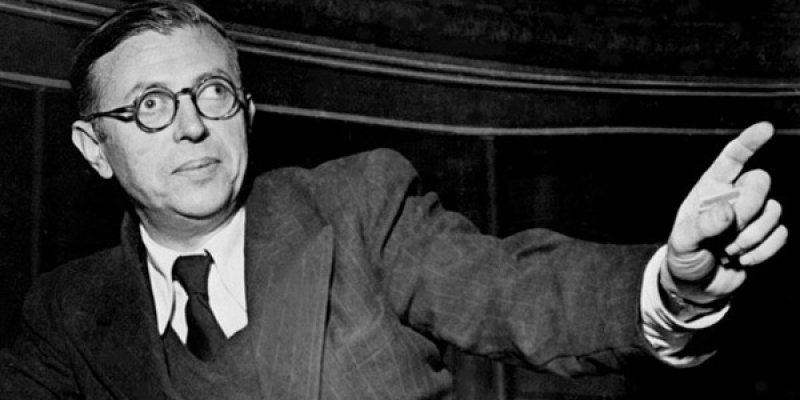
So what is Existentialism, Nihilism, and Essentialism? Let us start with Essentialism, Essentialism is the view that objects have a set of attributes that are necessary to their identity. In early Western thought, Plato's idealism held that all things have such an "essence"— an "idea" or "form". In Categories Aristotle similarly proposed that all objects have a substance, as George Lakoff put it, "make the thing what it is, and without which it would be not that kind of thing". The contrary view—non-essentialism denies the need to posit such an "essence'". To make things easier ill make an example of Essentialism, let's say you have a knife and one has a wooden grip while the other has a metal grip does that change the essence of the knife? no cause you still have the blade on top of it cause the blade is the essential property that completes the essence of the knife. Plato and Aristotle thought that everything has an essence, including us and they believe our essence exist in us before we were born, so by this thinking "Part of what it means to be a good human is to adhere to your essence". This belief known as Essentialism was the standard view of the universe all the way up until the late 19th century, and it is still accepted by many people today. But in the late 1800s, some thinkers started to challenge the idea that we are imbued with any essence or purpose. German philosopher Fredrich Nietzsche, for example, embraces Nihilism.
Nihilism is a philosophy, or family of views within philosophy, that rejects generally accepted or fundamental aspects of human existence, such as objective truth, knowledge, morality, values, or meaning. The term was popularized by Ivan Turgenev, who made use of it in his novel Fathers and Sons. Scholars of nihilism may regard it as merely a label that has been applied to various separate philosophies, or as a distinct historical concept arising out of nominalism, skepticism, and philosophical pessimism, as well as possibly out of Christianity itself. Contemporary understanding of the idea stems largely from the Nietzschean 'crisis of nihilism', from which derive the two central concepts: the destruction of higher values and the opposition to the affirmation of life. Earlier forms of nihilism, however, may be more selective in negating specific hegemonies of social, moral, political and aesthetic thought. and to make it a lot easier to digest, Nihilism is the belief in the ultimate meaningless of life. But by the 20th century, the path had been paved for French thinker Jean-Paul Charles Aymard Sartre to return to the question of essence and ask: What if we exist first? What if we were born without any hard-wire purpose? And then it's up to us to find our own essences? well this becomes the framework for what we know now as Existentialism and its mantra is the claim that "existence precedes essence".
What does "existence precedes essence" mean? well, in other words, our existence happens first then it's up to each of us to determine who we are. We have to wright our own essence, through the way we chose live in this world. And it's hard to express how radical this idea was at the time because, for thousands of years, you didn't have to choose a path or find your purpose. Because back then God did it for you, but it's important to note that existentialism isn't synonymous with atheism. Plenty of existentialists are atheists, but some are theists like Søren Aabye Kierkegaard. What theistic existentialists deny is any sort of teleology, that is, "they (existentialists) refute the notion that god made the universe, or our world, or us, with any particular purpose in mind". This is a fundamental component of existentialism and its Adherents refer to its as "The Absurd", you and I think of absurdity as something that's just silly or preposterous. But for existentialists, absurdity is a technical term, its how they describe "the search for answers in an answerless world", "since there's no Teleology, the world wasn't created for a reason, and it doesn't exist for a reason and if there's no reason for any of this, then there's also no absolutes to abide by: There's no cosmic justice, no fairness, no order, no rules.
Now, existentialism has its roots in the late 19th century, thinkers like Kierkegaard and Nietzsche. But it really came into its own during and after World War 2, as the horrors of the holocaust led many people to abandon any belief in an ordered world. When Nazis became possible, meaning became harder to find, but Sartre faced meaningless head-on and explored one of the most agonizing aspects of existentialism. It's not the world lack of meaning but its terrifying abundance of freedom, for most of us, freedom sounds pretty great but Sartre thinks that we are painfully, shockingly free. After all, "if there's no guidance for our actions, then each of us is forced to design our own moral code, to invent a morality to live by" and "You might think that there's some authority you could look up for answers, but all of the authorities you can think of are fake" "those authorities are just people like you- people who don't have any answers, people have to figure out for themselves how to live". So the thing you can really do, he determined, is to live authentically. Sartre once said "that whole point of that young man's decision is that no one could give him an answer, so his choice - no matter what it was - was the only true choice, provided that he made it authentically because it was determined by values he chose to accept". But most existentialists would remind you that the world, and life, could have a meaning, so no one could tell you that your life isn't worth anything to you. "if the world is going to have any of the this most of us value - like justice and order - we're going to put it there ourselves. Because otherwise, those things wouldn't exist"
that's a long one and thank you Ka Leo, who suggested I to look up Jean-Paul Charles Aymard Sartre. and it was fun.(Yes I will happily read the book you suggested), Peace
"L'enfer, c'est les autres!"









🤣 revolusiiii
khkhkhkhk